“A landmark documentary...delineates how virtuosity becomes identity”
- Debra Cash, NPR/WBUR

About The Film
This project was begun because nobody was paying serious attention to underground club House dancers. Any club footage of the 1980s and early ‘90s showed hundreds of torsos bouncing to the music, but few dancing bodies. Check Your Body at the Door is a large project involving 30 years (and counting) of shared relationships and histories involving many people, a lot of thinking, planning, teaching, watching and dancing – plus years of filming. Its mission is to educate people about underground-club House dancing and dancers - in the past, now and in the future - by various means: showing films to teaching in workshops and in academic classrooms; giving information about the people, the dance, dancers, the music, and the scene in print, online; and presenting everything from performances to scholarly panels.
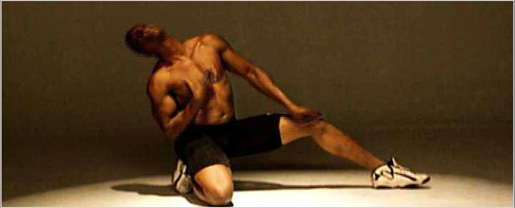
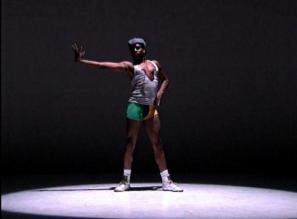
Archie Burnett, c. 1993
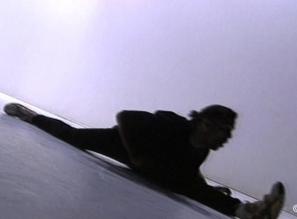
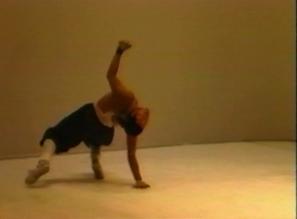
The film, Check Your Body at the Door, was specially made to show the dancing and the dancers. When Archie Burnett took Sally Sommer (dance critic and historian) to the Loft in 1982 she saw amazing artists: “I wanted to shoot a documentary that put dancers at the heart of the film, using Archie as guide.”
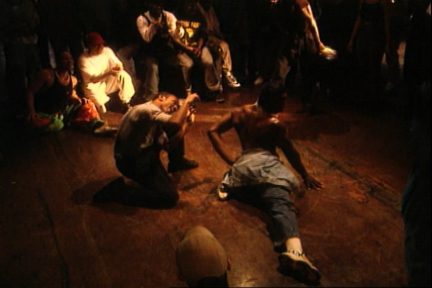
Courtney “French” Ffrench (left) improvises with Archie Burnett (right) in the cipher at Les Poulets, c. 1996
House dancers exist in a world that parallels other professional dancers, but club dancers work in the dark and at the edges. Still, they are the people who bring the music to motion, whose personalities and friendship clusters create the House vibe. In 1992, Check Your Body at the Door received its initial funding and filming began, thus becoming a means for reflection on the 30+ years of collective experiences in this special community.
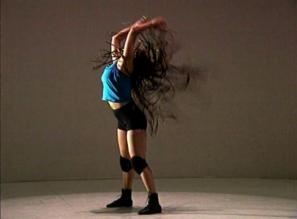
As a historical document, the film answers: What did House dancing look like? Who were the dancers? Why did they dance?
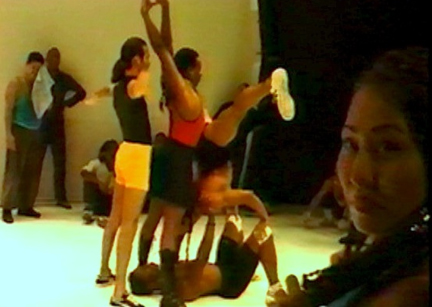 Asia Moon watching from the sidelines of the Lincoln Center shoot, 1993
Over time lives changed, dancing changed, and the scene evolved. The big web of relationships that make up the larger project existed long before the film Check Your Body at the Door was made, and it will continue long after the film is released.
The phrase “check your body at the door” came from the dancers. It means all sorts of things. Check your body at the door so your spirit can be free. For Brahms “Bravo” Lafortune it means “at some point tonight, I am going to lose my mind. That’s what I came here to do: to lose my mind.” For Archie Burnett “you take your attitude, your baggage, and all of that, and ‘check it at the door’ and go into the club a totally different person…aggravation free, stress free, life-problem free.” Check your body at the door also means being frisked, or, it means “Check it out,” it’s good. Burnett explains the metaphysics: "You give up something of yourself in order to get something...and it’s a good way to let the establishment know you come in peace."
Production Team
"Check Your Body at the Door" has been an exhaustive 30-year collaborative project. In 1981 Sally Sommer, Ph.D., Executive Director, met her inspiration and muse (and former student), Archie Burnett, who introduced her to The Loft. Through years of observation at clubs all over NYC, dancers were chosen. Production began in 1992, initially funded by the National Endowment for the Arts/Dance Heritage Initiative. Directed by co-conspirator and House dancer/skater, the late Michael Schwartz (d.1994) of "Character Generators," filming was done in the clubs and at Lincoln Center Clark Studio Theater. An 11-minute trailer was edited by Gary Bradley in 1994. In 1996 Bobbi Tsumagari joined Sommer as co-producer, along with Director Charles Atlas. Important footage was filmed 1996-7 in the clubs, on the jobs and with families by Charles Gelber’s crew of Gelber Television. Director Atlas and Photography Director Paul Brown finished filming in 1998 and Atlas’s edited final rough-cut of "Check Your Body at the Door" was completed, September 1999. In 2007 Marc Ray did additional pickup footage. Then in 2009 Shoko Letton began critical finalizing-editing, color correction with sound finalizing by Alex Davis, website design by Sommer, Alessandra Larson, with Marc Ray, Adam Varn and Keira Heu-Jwyn Chang.